7 tools
Generates strong, random passwords designed to enhance digital security. This tool constructs complex alphanumeric strings by mixing uppercase letters, lowercase letters, numbers, and symbols. To maintain maximum privacy and security, the password creation process occurs entirely within the user's browser environment without transmitting data over the internet. Users simply input their desired complexity or length settings and click generate to receive a unique credential suitable for protecting sensitive accounts. Individuals managing multiple online accounts, such as professional developers, remote workers, or anyone handling confidential information, benefit from this utility. It ensures that each account utilizes a distinct, robust password, significantly reducing the risk associated with credential reuse or weak security measures.
Calculates a letter-grade security score for a website's HTTP response headers, offering remediation guidance for missing or weak headers. Scans websites to identify security vulnerabilities through an analysis of their header configurations. Developers, site administrators, and cybersecurity professionals would use this tool to assess and improve the security posture of their web applications. By identifying potential weaknesses in HTTP headers, users can enhance their website's resistance to common attacks such as cross-site scripting (XSS), clickjacking, and other vulnerabilities, thereby protecting both user data and website integrity.
Analyzes TLS/SSL configurations for web servers, providing detailed reports with letter-grade ratings to assess HTTPS security. Users input their website URL to receive comprehensive information on encryption strength, protocol support, and potential vulnerabilities, aiding in improving site security. Ideal for developers, IT professionals, and security enthusiasts aiming to enhance the security of websites and applications.
Generates bcrypt hashes for passwords with a configurable cost factor, allowing users to securely store and verify passwords. By hashing plaintext passwords before storing them, this tool enhances security by making it difficult for attackers to access stored passwords even if they gain unauthorized access to the database. Developers, system administrators, and individuals concerned with password security would use this tool to ensure that user credentials are protected. The bcrypt algorithm is widely used due to its resistance to brute-force attacks, making it an essential choice for applications requiring high levels of security.
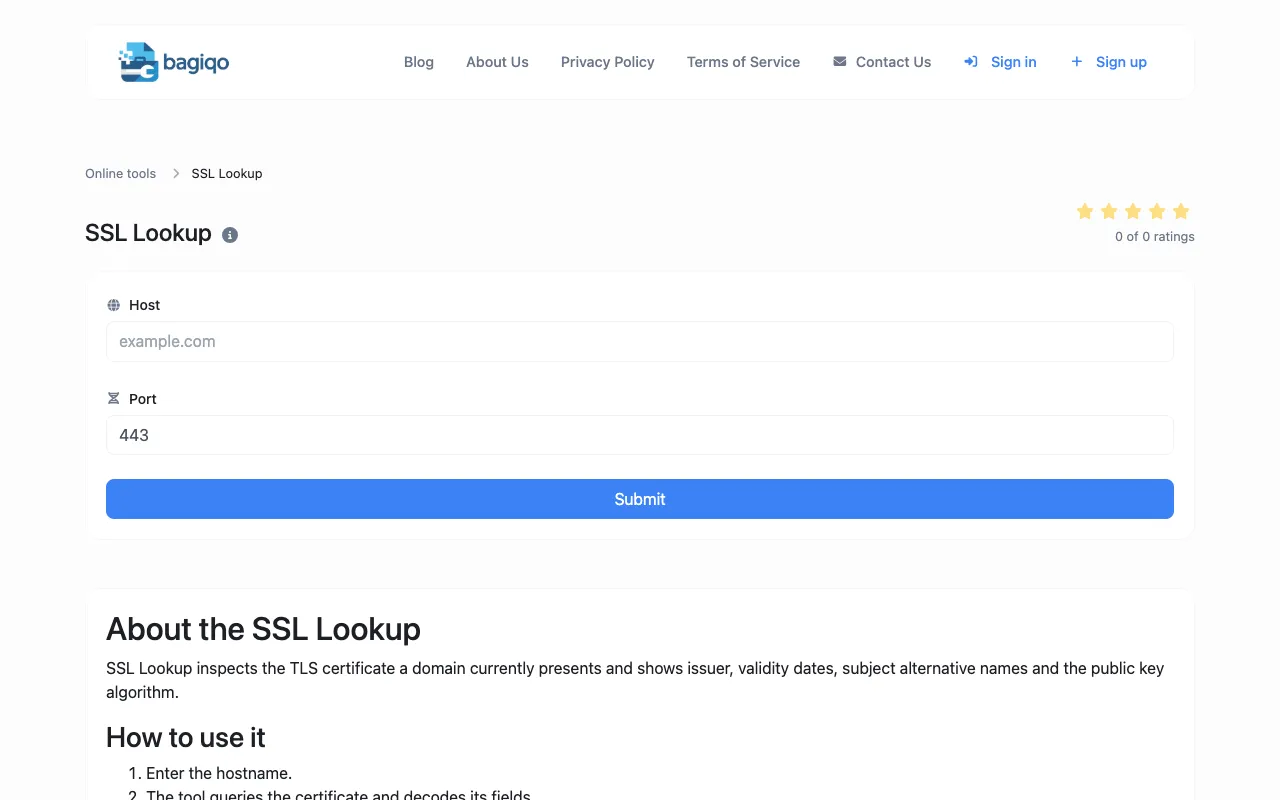
The SSL Lookup tool inspects and verifies SSL/TLS certificate details for any domain or hostname. Users can view certificate validity dates, issuer information, subject details, certificate chain, and overall security configuration in one comprehensive report. Essential for webmasters, developers, and IT professionals ensuring proper SSL certificate installation, monitoring certificate expiration dates, validating security configurations, and troubleshooting certificate-related issues.
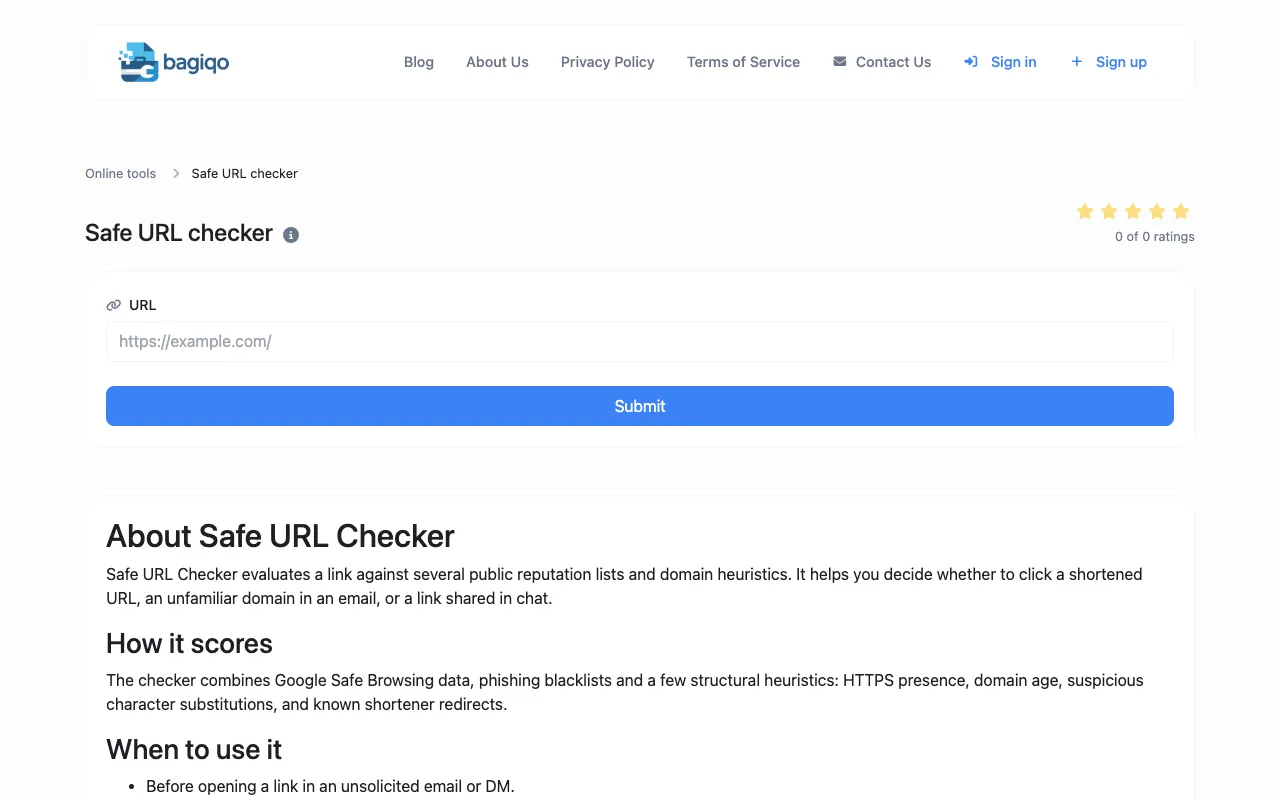
The Safe URL Checker verifies whether a website URL or link is flagged as suspicious, malicious, or unsafe by Google Safe Browsing database. Users can quickly check link safety before clicking or sharing potentially dangerous URLs with others. Essential for security-conscious users, content moderators, email administrators, and web professionals verifying link safety, protecting against malicious websites, and preventing accidental sharing of compromised or dangerous links.
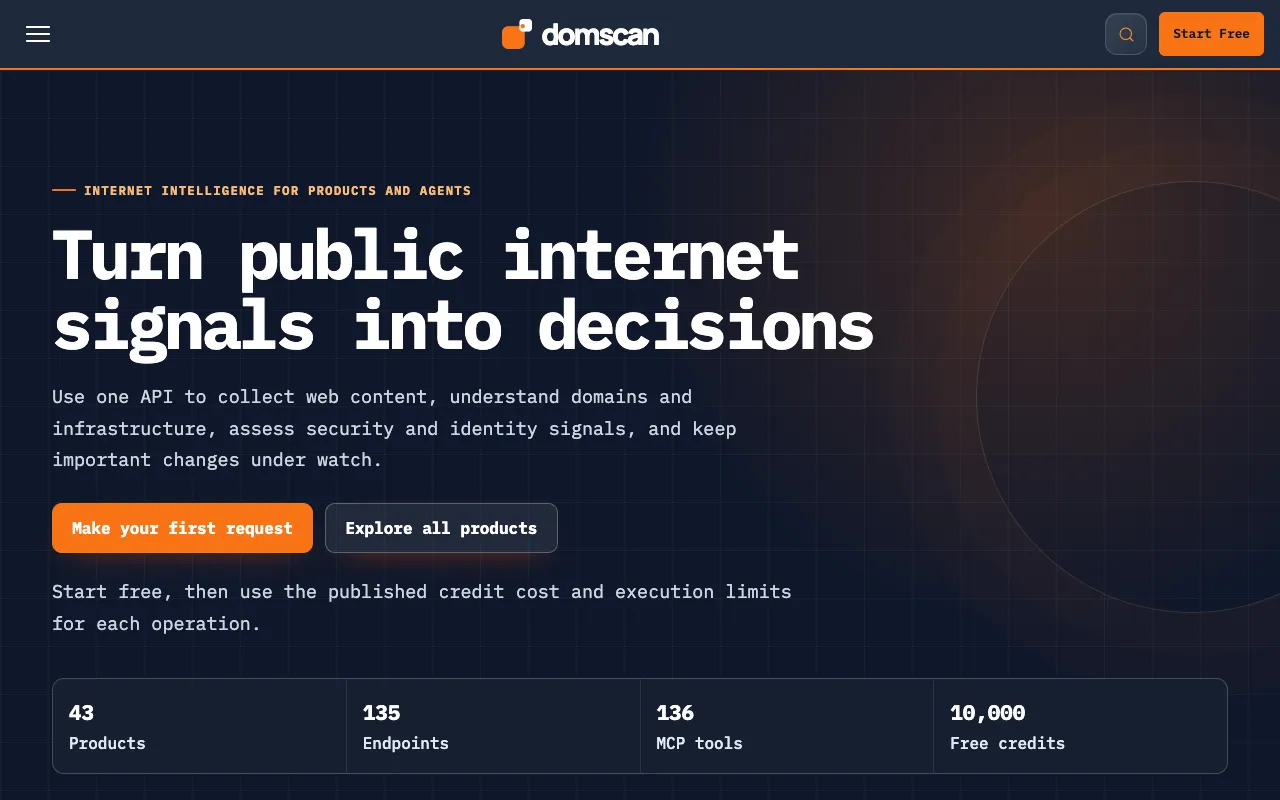
DomScan is a domain research platform that combines browser tools, APIs, and MCP tools for comprehensive domain analysis. It provides domain availability checking, DNS record lookup, WHOIS and RDAP data retrieval, domain valuation estimates, and security assessment capabilities. The platform serves developers and domain professionals who need accurate, structured domain intelligence. The service offers multiple access methods: free browser-based tools for quick lookups, documented APIs for programmatic access, and MCP tools for integration with AI systems. New users receive a monthly free credit allocation, making it accessible without payment information upfront.