01

Generates UUIDs in bulk for various versions (v1, v3, v4, v5) with both single and multi-UUID output options for seeding test data or assigning identifiers. Researchers, developers, and testers often need unique identifiers for their projects. This tool simplifies the process by providing a variety of UUID versions and bulk generation capabilities, making it easier to assign IDs without manual...
Side by side
| Tool | Best for | Strengths | Limitations |
|---|---|---|---|
| DevBolt devbolt.dev | Bulk UUID v4 generation |
|
|
| IT Tools it-tools.tech | Multiple UUID versions in bulk |
|
|
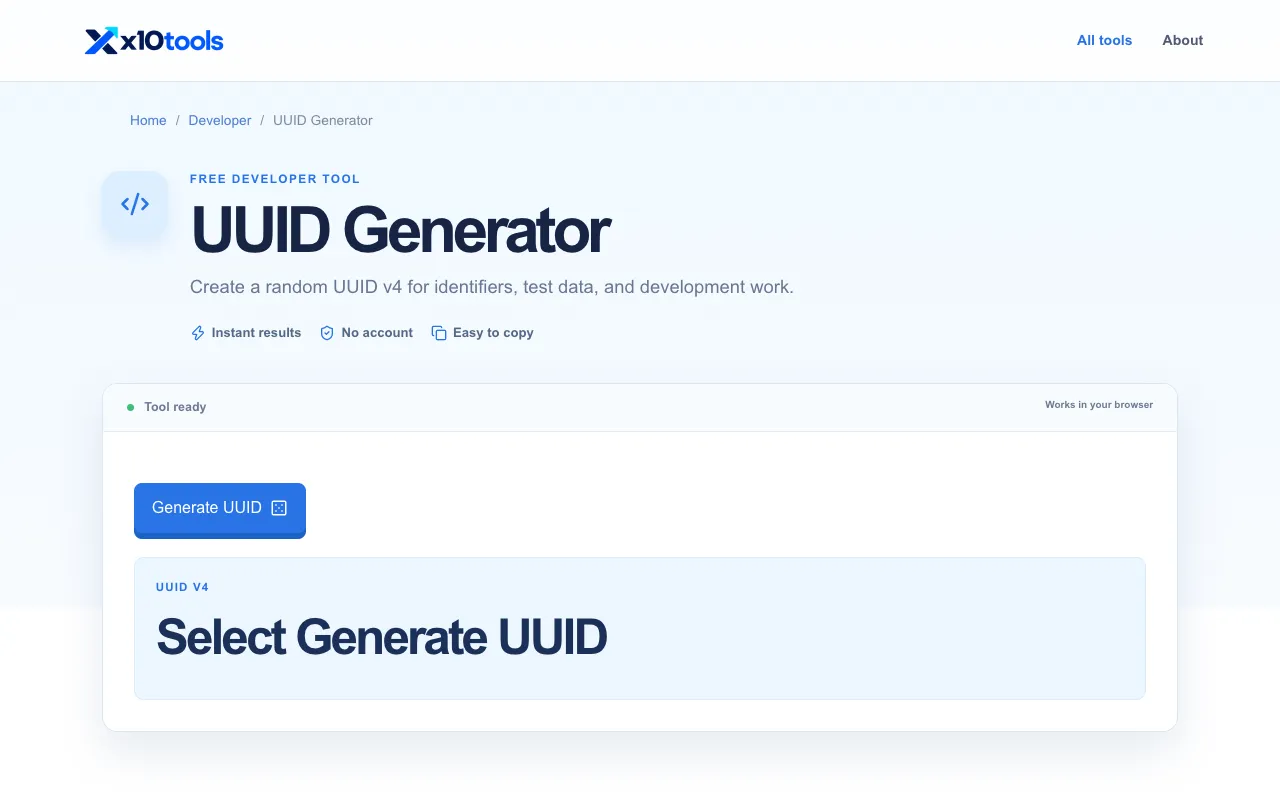
| X10Tools x10tools.com | Simple single UUID v4 generation |
|
|
Buyer's guide
When you need a specific UUID version for compatibility or standards, IT Tools is the only option among these three that generates v1, v3, v4, and v5. If you only need random v4 IDs and want to avoid data leaving your browser, DevBolt processes everything locally and supports bulk output up to 500 at once. X10Tools is suitable for quick single UUID generation but includes ads on the page and offers only v4.
Questions