3 tools
Free online tool for creating customizable name-tracing worksheets specifically designed for handwriting practice. It generates printable worksheets with kindergarten-style guide lines that children can trace to learn proper letter formation and develop fine motor skills. The tool offers flexible customization options to match different learning needs and classroom settings. Features include selectable print or cursive fonts, adjustable letter sizes, optional stroke-start dots to guide pencil placement, and a blank practice row for independent work after tracing. Users can add worksheet labels in English, Spanish, or French to support multilingual classrooms and diverse learners. The whole-class mode enables group instruction, and no account or signup is required to access and use the generator.
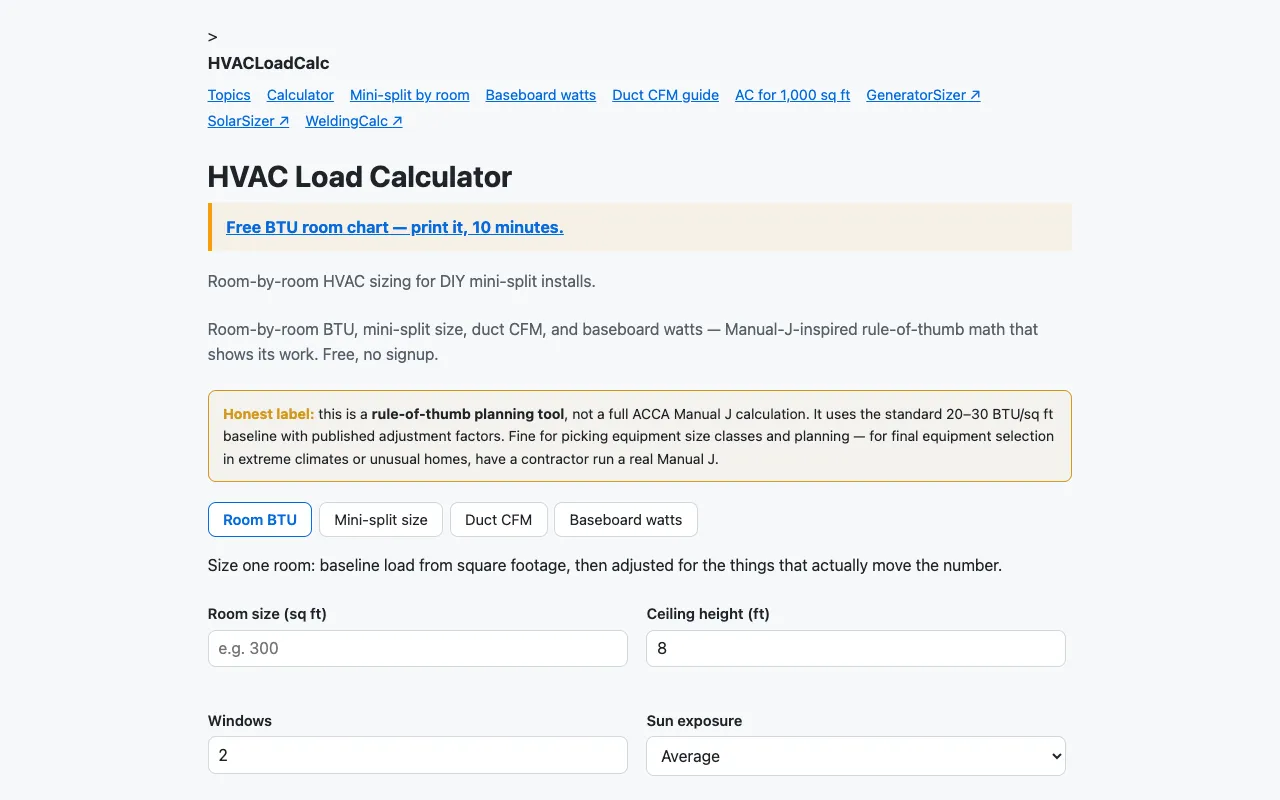
An educational HVAC load calculator designed to estimate the heating and cooling requirements for residential and commercial buildings. It helps users understand how HVAC system capacity requirements are determined based on multiple factors including space dimensions, insulation characteristics, climate conditions, and other environmental variables affecting thermal performance. The calculator provides a straightforward method for accurately determining how much heating and cooling capacity is needed for a given area or building. Useful for homeowners planning renovations or new construction, students and educators learning about HVAC system design fundamentals, and professionals who need to understand proper system sizing requirements and load calculations for their projects.
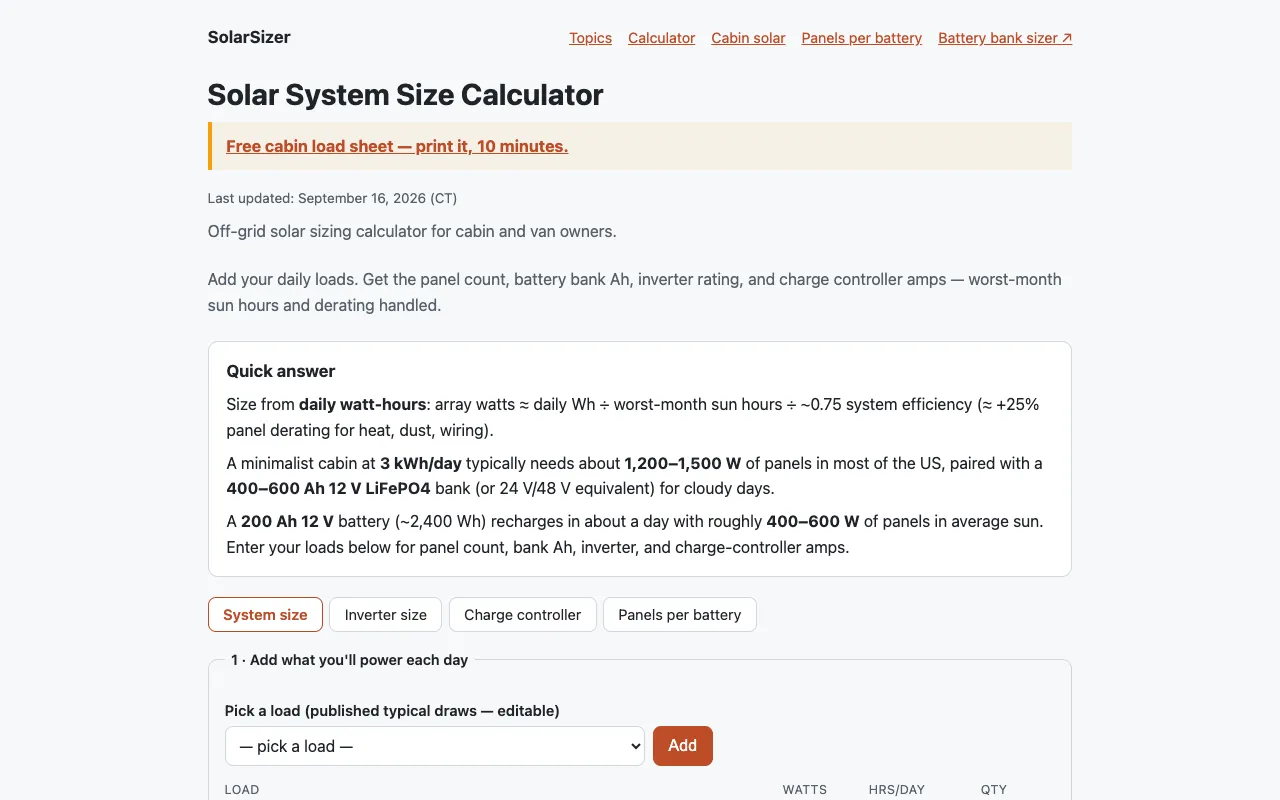
Solar Sizer is a free educational tool for estimating solar panel capacity and calculating energy production requirements. The online calculator helps users determine the appropriate system sizing based on their specific location, energy consumption patterns, and other relevant factors that influence solar system design. The tool enables users to explore different solar panel configurations and understand their corresponding energy output potential under various conditions. By inputting key information about location and energy requirements, users can estimate the panel capacity needed and project expected energy production levels, which supports informed decision-making during the planning and design phases of solar installations.