01

01
Omni Calculator
omnicalculator.com
The savings goal calculator shows you how much money you need to put aside to reach your savings goal.
Calculates the amount of money needed to reach your savings goal by considering your desired amount, time horizon, and expected rate of return on investment. Users input their financial objectives and receive personalized insights into how much they must save regularly to meet those goals. Ideal for anyone planning for retirement, saving for a home, or any long-term financial aspirations looking...
The savings goal calculator shows you how much money you need to put aside to reach your savings goal.

Calculates required monthly savings rate to hit a target balance by a chosen date.
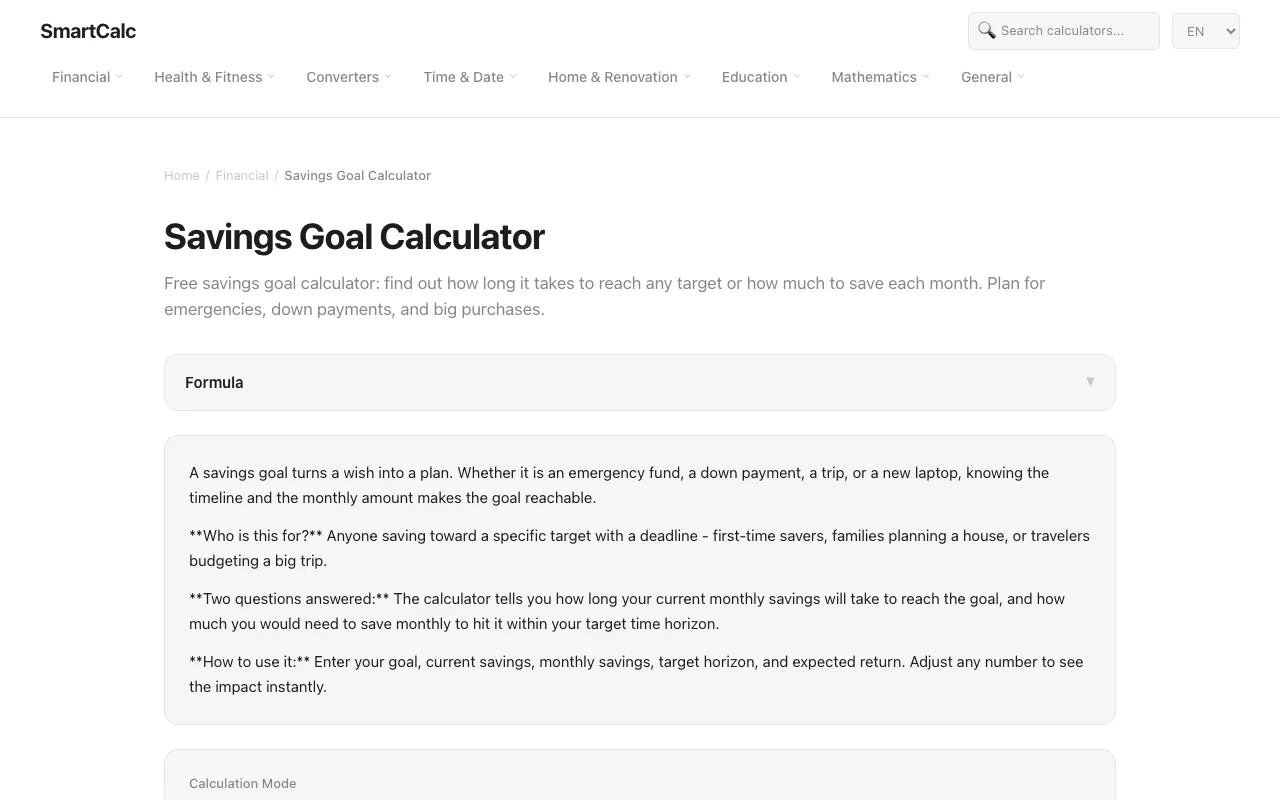
Free savings goal calculator: find out how long it takes to reach any target or how much to save each month. Plan for...
Side by side
| Tool | Best for | Strengths | Limitations |
|---|---|---|---|
| Omni Calculator omnicalculator.com | Users needing detailed compounding options |
|
|
| Bankrate Calculators bankrate.com | Bankrate users wanting simple savings targets |
|
|
| SmartCalc smartcalc.top | People who want instant feedback while tweaking numbers |
|
|
Buyer's guide
When picking a savings goal calculator, the most important numbers are your target amount, time horizon, and expected rate of return — these drive the monthly savings figure. If you want to test many different compounding frequencies or payment schedules, Omni Calculator gives you the most controls. If you just need a quick, simple monthly savings number without extra options, Bankrate or SmartCalc will get you there faster.
Questions