Housing & Real Estate2 options compared

Gross Rent Multiplier Calculator

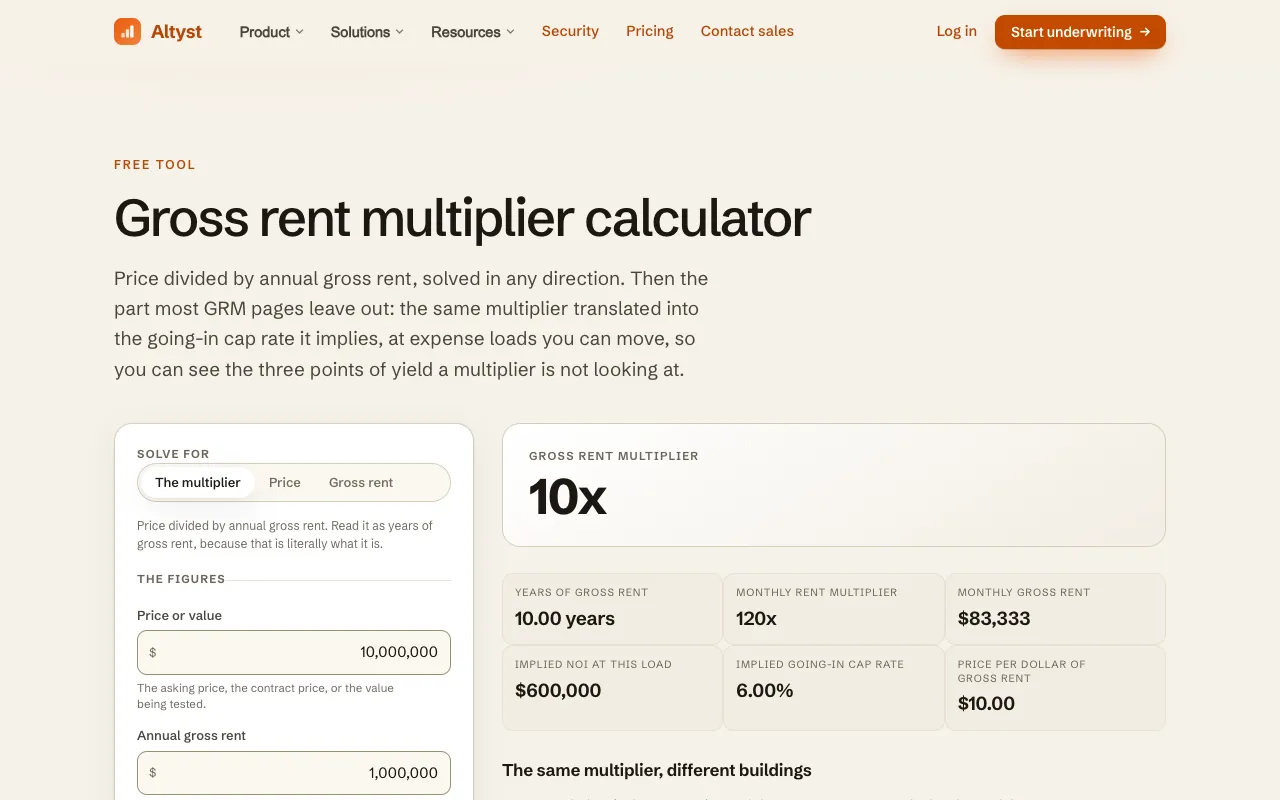
Calculates the Gross Rent Multiplier (GRM) by using two key inputs: the total property price and the estimated gross annual rental income. This metric provides a standardized method for valuing and comparing investment properties across different markets. The tool guides users through a straightforward process, allowing them to input financial data to instantly determine the GRM ratio....

Editors’ Top PickBased on community votes
Other OptionsRanked by votes

Side by side

Gross Rent Multiplier Calculator options compared

ToolBest forStrengthsLimitations
Omni Calculator
omnicalculator.com
Quick GRM with related real estate tools
  • Community votes indicate reliability
  • Part of a larger suite of mortgage and rental calculators
  • May include ads or promotional content on the page
  • Focused on single-property GRM rather than side-by-side comparisons
Financial Toolset
financialtoolset.com
Side-by-side property screening
  • Clear example showing how GRM differs between two properties at the same price
  • Clean layout with property price and annual gross rent inputs
  • Zero community votes, so no user-validated feedback
  • Page includes advertisements that may distract from the calculator

Buyer's guide

How to choose a gross rent multiplier calculator

When picking a GRM calculator, the two numbers you need are always the property price and the gross annual rental income — make sure both are entered consistently (monthly rent multiplied by 12, or annual rent directly). A lower GRM means the property generates more rent relative to its price, which generally signals a better income-producing opportunity, but GRM does not account for expenses, vacancies, or financing costs, so use it as a quick screen rather than a full valuation. The main difference between these options is that Omni Calculator offers a broader set of real estate tools if you need other metrics later, while Financial Toolset provides a focused, example-rich interface that makes it easier to compare two properties side by side before you tour them.

Questions

Gross Rent Multiplier Calculator FAQ

What is a good Gross Rent Multiplier number?
There is no universal "good" GRM because it varies by market and property type, but investors often look for a GRM below 10 for residential rentals as a rough rule of thumb; a lower number means the property’s price is covered by rent faster, but you should always check local comps and factor in operating expenses before deciding.
Can I use GRM for commercial properties?
Yes, but GRM is more commonly applied to residential rentals; for commercial spaces, the metric may need to be adjusted for lease terms, tenant type, and longer vacancy periods, so use it as a starting point rather than a definitive valuation.
Do I need to include vacancy rates in the GRM calculation?
No — GRM uses gross annual rental income without deducting vacancy or operating costs, so it is a gross metric; if you want a more accurate picture of cash flow, calculate net operating income and divide by the property price instead.
How is GRM different from cap rate?
GRM is property price divided by gross annual rent, while cap rate divides net operating income by property price; cap rate factors in expenses and gives a return percentage, whereas GRM is a simpler ratio that only compares price to income before costs.
Should I rely on GRM alone when making an offer?
No — GRM is a quick screening tool that ignores taxes, maintenance, insurance, and financing; experienced investors use it alongside cap rate, cash-on-cash return, and a full property inspection before making an offer.
Keep Exploring

Related tools in Housing & Real Estate

View all →