Electrical2 options compared

Wire Size Calculator

Calculates the appropriate electrical wire size needed based on the current load, voltage, and other factors to ensure safe and efficient power transmission. Helps users in home improvement, construction, and electronics by ensuring they choose the right cable type for their project, preventing potential hazards like overheating or insufficient current flow.

Editors’ Top PickBased on community votes
Other OptionsRanked by votes
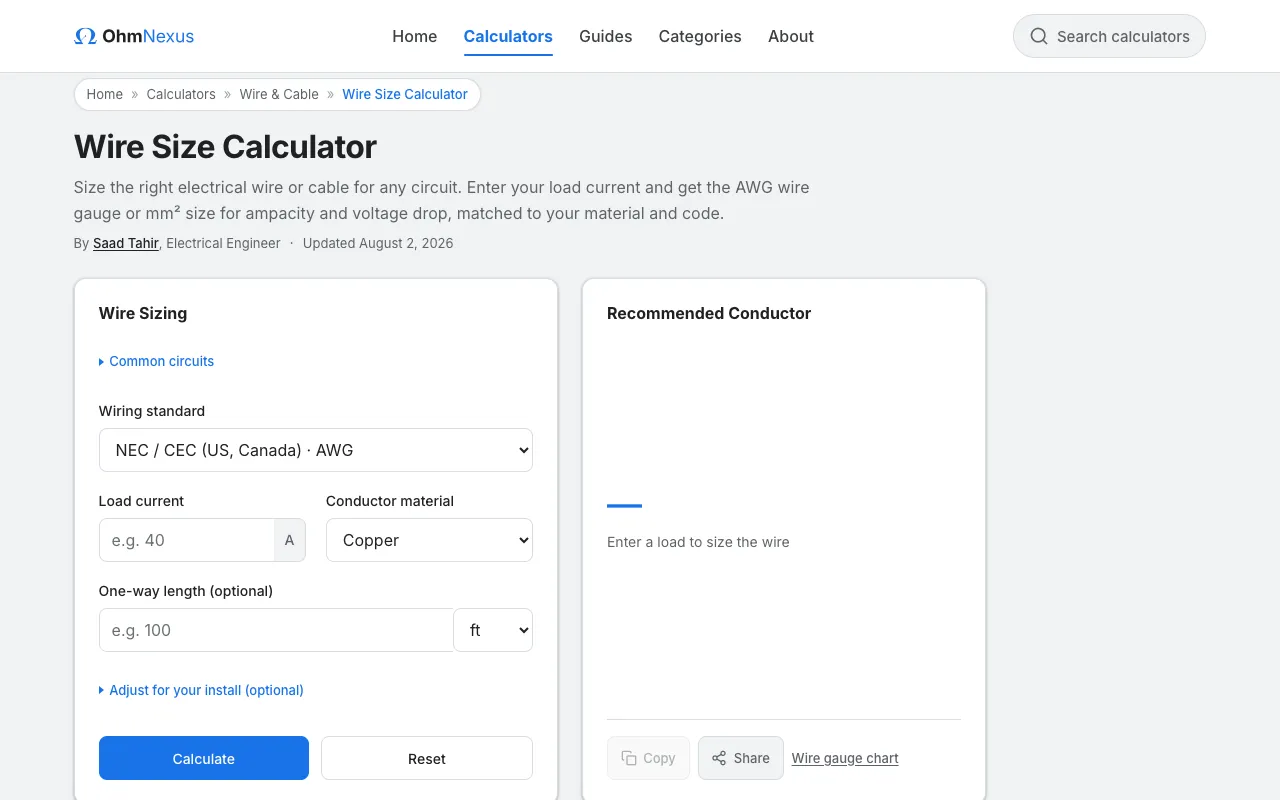
  1. Screenshot of OhmNexus
    02
    OhmNexus
    ohmnexus.com

    Calculates the correct electrical wire gauge (AWG) or millimeter size needed for any circuit based on load current, m...

Side by side

Wire Size Calculator options compared

ToolBest forStrengthsLimitations
Omni Calculator
omnicalculator.com
Quick estimates and common projects
  • Simple input fields
  • Specialized modes for 12V and low-voltage lighting
  • Less detail on code compliance
  • Fewer installation method options
OhmNexus
ohmnexus.com
Code-compliant installations
  • Extensive code and material options
  • Detailed installation method settings
  • More fields to fill out
  • No specialized low-voltage modes mentioned

Buyer's guide

How to choose a wire size calculator

When picking a wire size calculator, the most important factors are the input fields you have and whether the tool accounts for voltage drop and installation conditions. If you need a fast answer for a typical home project, a simpler calculator with fewer required fields will get you results quicker. If your project involves specific electrical codes, different wire materials, or non-standard installation methods, choose a tool that lets you adjust those details to avoid undersizing your wire.

Questions

Wire Size Calculator FAQ

How do I know which wire gauge I need for my project?
You need to know the current load, the distance the electricity must travel, the voltage, and the acceptable voltage drop. Most calculators will ask for these values and then recommend a wire gauge that can safely carry the load over that distance.
What is voltage drop and why does it matter?
Voltage drop is the reduction in voltage that occurs as current flows through a wire. If the wire is too long or too thin, the voltage at the end of the circuit can be too low for your device to work properly. Calculators help you pick a wire size that keeps the drop within an acceptable range.
Can I use the same wire size for 12V and 120V systems?
No, 12V systems typically require much larger wire gauges than 120V systems for the same load and distance because voltage drop is more significant at lower voltages. Some calculators have a specific mode for low-voltage or DC systems to handle this difference.
Does it matter if I use copper or aluminum wire?
Yes, copper is a better conductor than aluminum, so an aluminum wire needs to be one gauge size larger than a copper wire to carry the same current. Make sure the calculator you use lets you select the correct material for an accurate result.
What if I am wiring in a conduit or enclosed space?
Wiring in a conduit or enclosed space reduces the wire's ability to dissipate heat, which can limit its current-carrying capacity. If your installation method is enclosed, you should choose a calculator that lets you specify this, or consult local electrical codes for derating factors.
Keep Exploring

Related tools in Electrical

View all →