Pressure Washer Diagnostic
This pressure washer diagnostic tool provides a quick troubleshooting check for machines experiencing low or no worki...
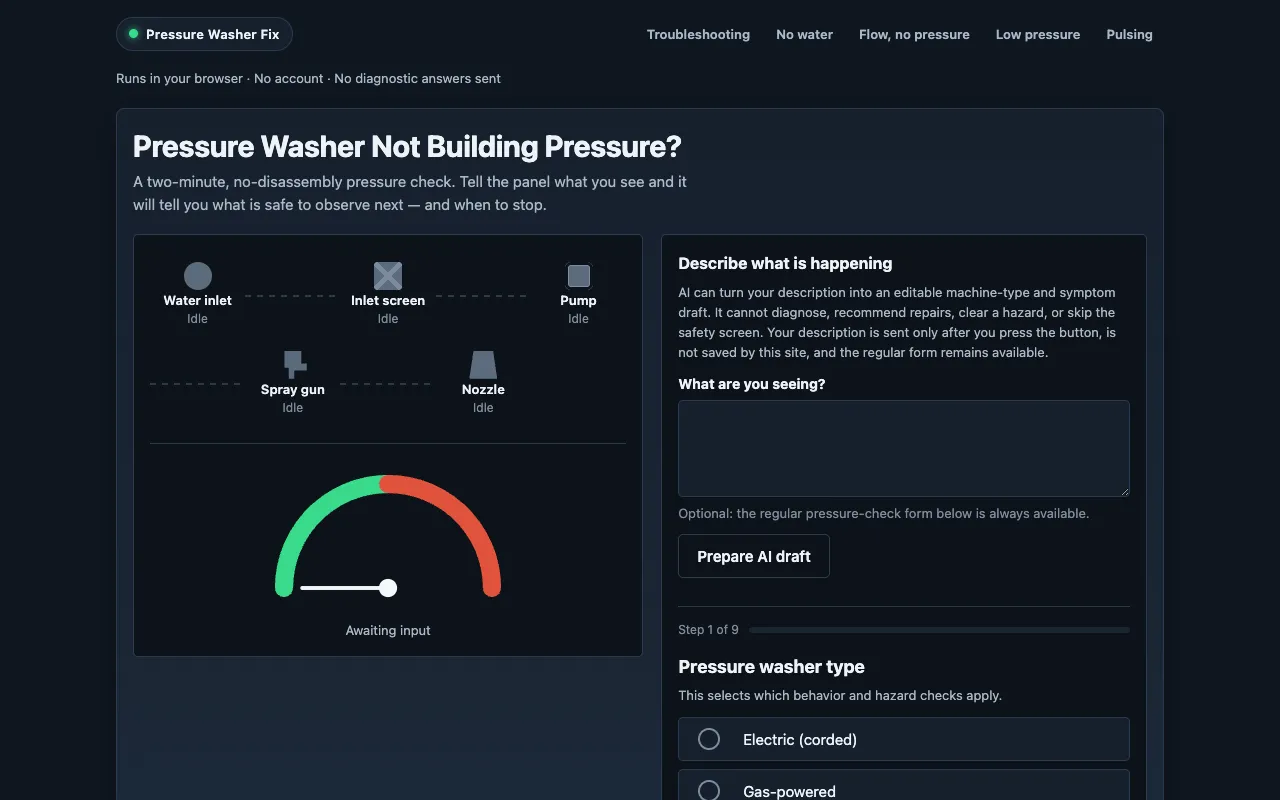
What Pressure Washer Diagnostic does
A concise summary of the tool's purpose and function, designed for quick scanning by users seeking specific diagnostic information or repair guidance for pressure washer systems. The content is structured to provide clear, actionable guidance without unnecessary fluff, focusing on practical troubleshooting steps that users can apply immediately. The format prioritizes readability and ease of navigation, making it simple for users to find the specific information they need without wading through unnecessary details.
How to use the Pressure Washer Fix Pressure Washer Diagnostic
- 1
Identify the specific symptom or error code you're experiencing with your pressure washer.
- 2
Navigate through the categorized troubleshooting sections to find relevant solutions.
- 3
Apply the recommended fixes based on the specific issue you're experiencing.
- 4
If problems persist after following the troubleshooting steps, consult a professional technician for further assistance.
Best for
Homeowners and DIY enthusiasts who need to troubleshoot and repair their pressure washer issues without professional service calls.
Limitations
- Diagnostic accuracy depends on correctly identifying the specific symptom and matching it to the right troubleshooting path.
- The tool is designed for common pressure washer issues and may not cover highly specialized or rare mechanical failures.
- Users should exercise caution when performing any repairs and consult professional service if the issue persists or seems beyond basic troub
Pressure Washer Diagnostic FAQ
- What if my pressure washer won't start?
- Check the power source, fuel system (if applicable), and basic components like spark plugs and filters before proceeding with more complex diagnostics.
- Can I fix pressure washer issues myself, or should I call a professional?
- Many common pressure washer issues can be resolved with basic troubleshooting and replacement parts. However, for complex electrical or mechanical issues, consulting a professional technician is recommended to ensure safety and proper repair.
- What if I'm not comfortable performing repairs myself?
- It's always safest to consult a qualified technician for repairs beyond basic maintenance. They can diagnose the issue accurately and perform the repair safely and efficiently.
Similar tools
Based on shared tags