Compliance
Our Compliance category features 14 free tools designed to help organizations ensure they meet regulatory requirements and maintain data security. From GDPR compliance checkers to privacy policy generators, these resources offer comprehensive solutions for managing legal and operational standards. Whether you are a small business looking to streamline your compliance processes or a large corporation navigating complex regulations, our tools provide the necessary support and guidance to stay compliant and protected.
17 tools


Guide
About compliance tools
The Compliance category provides free online tools that help organizations meet regulatory requirements and protect sensitive data across multiple frameworks. These resources address common legal obligations such as privacy policy creation, data handling standards, and security assessments, enabling users to identify gaps and implement necessary controls without specialized legal counsel. The tools cover a range of needs from website-level compliance to enterprise-wide security posture evaluations.
Before selecting a tool, users should understand the specific regulatory framework they need to satisfy, as requirements vary significantly between jurisdictions like GDPR, CCPA, and HIPAA, and across industries such as healthcare, finance, and e-commerce. Key concepts include data subject rights, lawful bases for processing, consent mechanisms, and breach notification timelines. Common mistakes include assuming a single tool covers all obligations, overlooking sector-specific requirements, and failing to update policies as regulations evolve.
These free tools serve as practical starting points for compliance workflows, but they typically provide guidance rather than legal advice. Users should verify that generated documents align with their actual data processing activities and consider supplementing automated assessments with professional consultation for high-stakes or complex regulatory environments.
Find the right tool
Compliance tools by task
Policy & Document Creation
Tools in this theme help users generate essential compliance documents such as privacy policies, NDAs, and security policies tailored to their specific operations. The Privacy Policy Generator and Security Policy Creator assist websites and organizations in outlining data handling practices, while the NDA Generator protects confidential information shared between parties.
Regulatory Risk Assessment
These tools evaluate an organization's readiness against specific frameworks by identifying gaps and calculating risk metrics. The GDPR Compliance Checker scans websites for common violations, the SOC 2 Type II Gap Analysis assesses Trust Service Criteria maturity, and the Vendor Risk Management Scorecard quantifies third-party risk into actionable remediation plans.
Sector-Specific Compliance
Certain industries have unique regulatory demands that these tools address directly. The HIPAA Quick Assessment helps healthcare practices evaluate their adherence to health privacy rules, while the Data Classification Policy Architect builds frameworks integrating industry standards with compliance requirements. The Ransomware Resilience Assessment focuses on backup and recovery capabilities critical for business continuity.
Operational & Technical Compliance
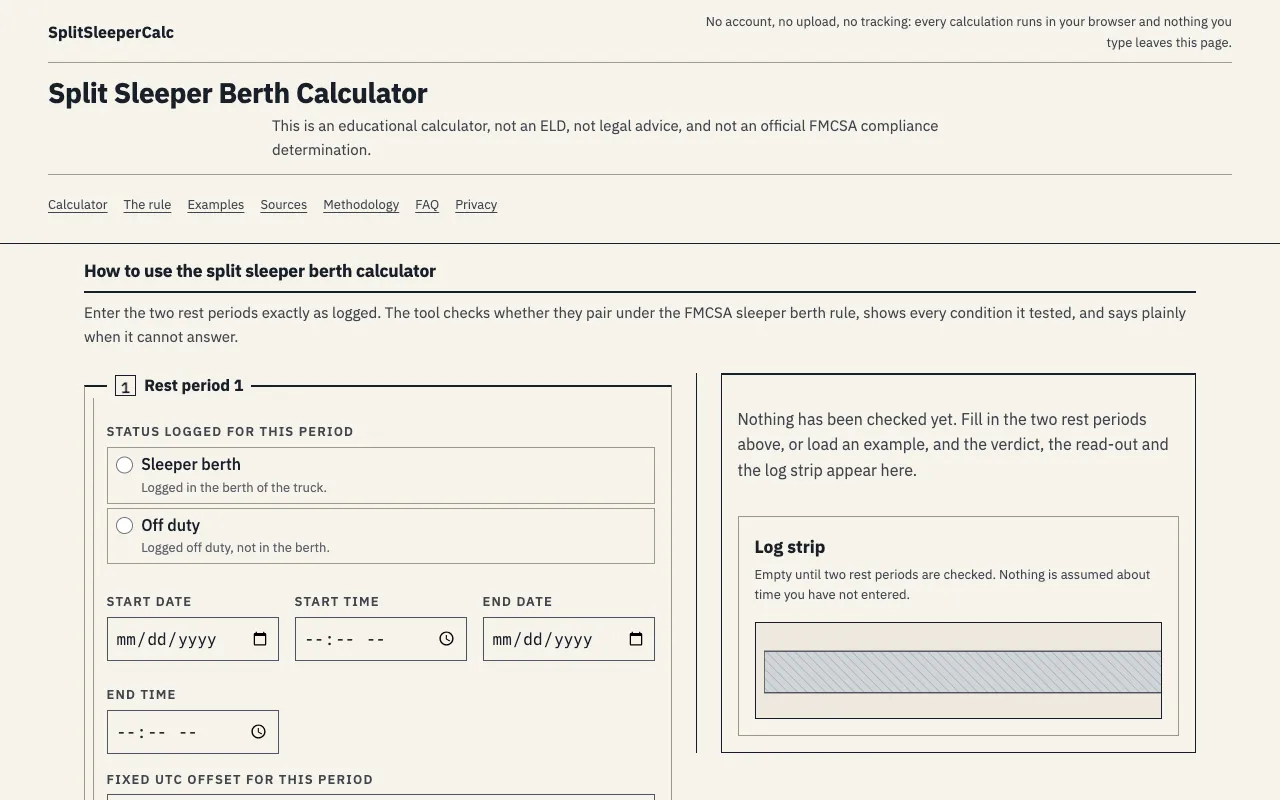
This theme covers tools that support day-to-day operational requirements and technical security controls. The CI/CD Security Checklist evaluates pipeline practices for secrets management and application testing, the Cloud Security Self-Assessment benchmarks posture across major platforms, and the EDR Needs Assessment guides small businesses toward appropriate endpoint protection. The Split Sleeper Berth Calculator ensures transportation compliance with federal regulations.
Planning & Documentation
Tools supporting broader project and organizational planning include the Statement of Work Generator, which balances project clarity with legal protection, and the GDPR Role & Retention Mapper, which determines whether an organization acts as Controller, Processor, or Joint Controller under GDPR, guiding subsequent data handling decisions.
Questions
Compliance FAQ
- Can these free tools make my organization fully compliant with regulations like GDPR or HIPAA?
- No single free tool can guarantee full compliance, as regulations require ongoing processes, staff training, and technical controls beyond what automated generators or checklists can provide. These tools serve as useful starting points for identifying gaps and creating initial documents, but should be supplemented with professional legal advice and continuous monitoring for high-stakes compliance needs.
- How do I choose between a GDPR compliance checker and a privacy policy generator?
- A GDPR compliance checker scans your existing website to identify technical violations such as missing cookie consent or third-party trackers, while a privacy policy generator creates a customized legal document based on the information you provide about your data practices. Use the checker first to understand your current state, then the generator to draft your policy.
- What is the difference between a Controller and Processor under GDPR?
- A Controller determines the purposes and means of processing personal data, while a Processor processes data on the Controller's behalf. The GDPR Role & Retention Mapper helps identify which role your organization occupies, which then determines your specific obligations regarding data subject rights, retention periods, and documentation requirements.
- Do I need technical expertise to use these compliance tools?
- Most tools in this category are designed with user-friendly interfaces that require minimal technical knowledge, though some like the CI/CD Security Checklist or Cloud Security Self-Assessment may benefit from basic familiarity with your organization's technical infrastructure. The HIPAA Quick Assessment and NDA Generator are particularly accessible for non-technical users.
- How often should I re-run compliance assessments or update generated documents?
- Regulatory requirements and your organization's data practices can change frequently, so it is advisable to re-run assessments at least annually or whenever you launch new products, enter new markets, or modify how you collect and process personal data. Generated documents like privacy policies should be reviewed and updated whenever your data handling practices change.