Business Tools2 options compared

Cost of Goods Sold Calculator

Calculates the total cost incurred to produce and sell goods using inputs such as purchase price, quantity purchased, quantity sold, and selling price. Helps users in finance and inventory management by providing insights into the profitability of their products. Suitable for small business owners, entrepreneurs, and anyone involved in managing inventory and financial records. Assists in making...

Editors’ Top PickBased on community votes
Other OptionsRanked by votes
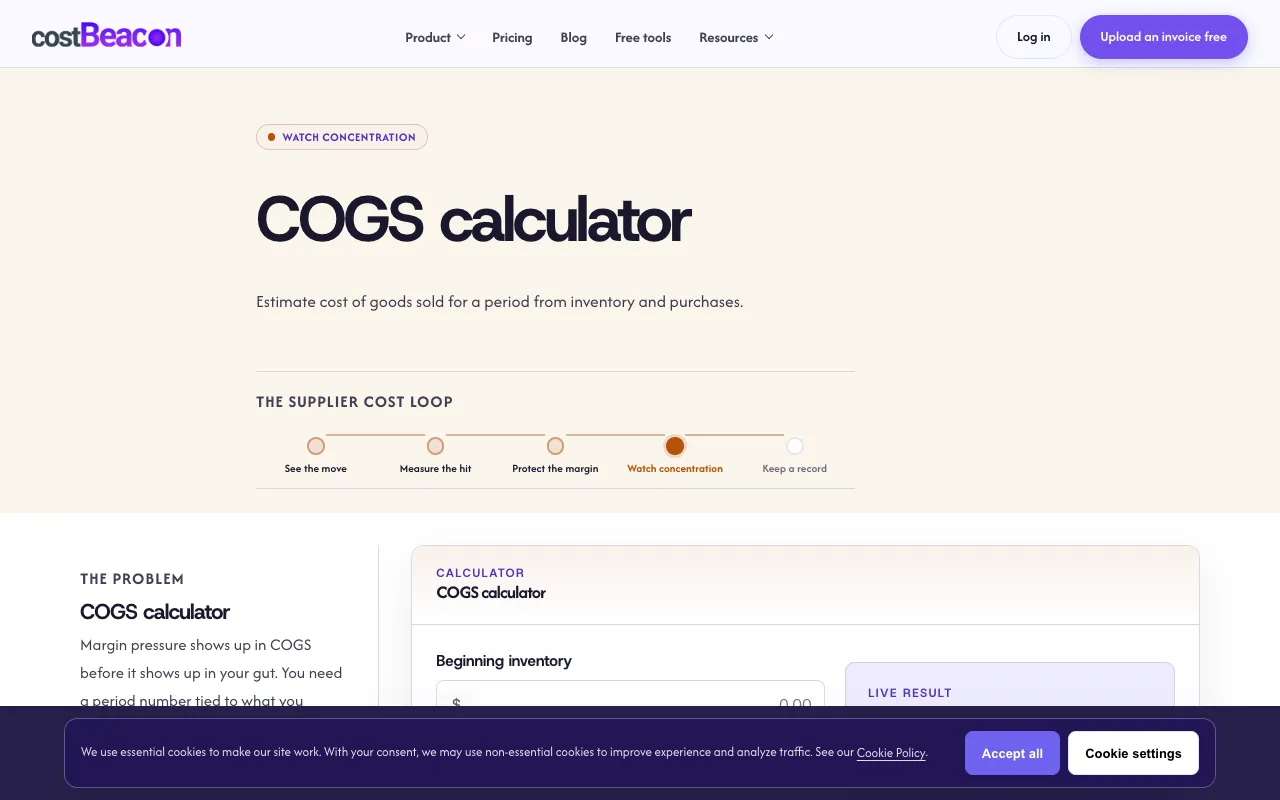
  1. Screenshot of CostBeacon
    02
    CostBeacon
    costbeacon.com

    Calculate cost of goods sold for restaurants, retail stores, and other small businesses tracking supplier costs. Prov...

Side by side

Cost of Goods Sold Calculator options compared

ToolBest forStrengthsLimitations
Omni Calculator
omnicalculator.com
Users needing a full COGS formula with inventory inputs
  • Prompts for raw material, labor, and overhead costs
  • Provides related calculators for inventory turnover and margin
  • May include more detail than needed for simple purchase-based COGS
CostBeacon
costbeacon.com
Restaurant and retail owners tracking supplier invoices
  • Designed for SMB operators evaluating pricing strategy and supplier relationships
  • Pairs COGS with supplier concentration analysis
  • Fewer unit options; focused on invoice-backed purchase data

Buyer's guide

How to choose a cost of goods sold calculator

When picking a COGS calculator, first decide whether you need a full formula that includes beginning inventory, purchases, and ending inventory, or a simpler calculation based on actual supplier invoices. If you are setting prices or analyzing product profitability without accounting software, CostBeacon's invoice-backed approach suits restaurants and retailers. If you want a quick, comprehensive figure and access to related business metrics, Omni Calculator provides more input fields and linked tools.

Questions

Cost of Goods Sold Calculator FAQ

What is included in the cost of goods sold calculation?
COGS typically includes direct costs like raw materials, labor, and manufacturing overhead required to produce the goods sold during a period. Beginning inventory plus purchases minus ending inventory gives the total cost of goods sold.
How often should I calculate COGS for my small business?
Monthly or quarterly is enough for most small businesses, especially if you review supplier bills on the same schedule. Aligning COGS calculations with your regular invoice review helps track profitability trends.
Can I use a COGS calculator if I don’t have accounting software?
Yes. Tools like CostBeacon are built for small businesses that track supplier costs manually. You can enter beginning inventory, purchases, and ending inventory to get a COGS figure without needing full accounting software.
What is the difference between COGS and gross profit?
COGS is the direct cost to produce the goods you sold. Gross profit is what remains after subtracting COGS from your revenue. Gross profit margin shows the percentage of revenue that exceeds direct production costs.
Does COGS include operating expenses like rent or utilities?
No. COGS only includes direct costs tied to producing the goods sold. Operating expenses such as rent, utilities, and marketing are separate and are subtracted after gross profit is calculated.
Keep Exploring

Related tools in Business Tools

View all →